
IRS Employee Safety: Reporting Gaps and Benefits Planning
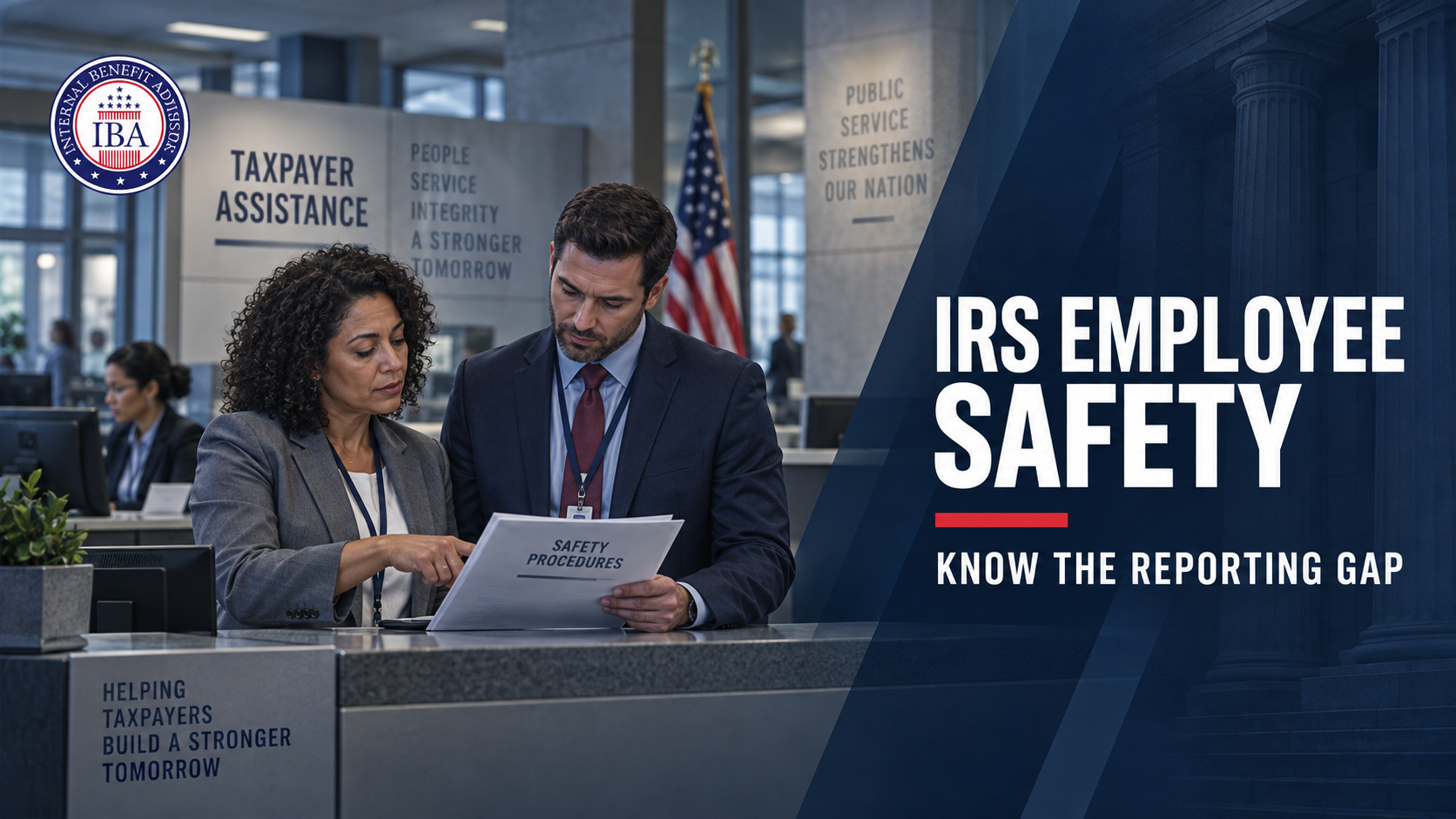
For career civil servants in taxpayer-facing roles, managing public frustration can be part of the working day. When an interaction escalates into a threat, employees need clear reporting procedures and dependable support. They also need to understand what an unexpected interruption to work could mean for their income and federal benefits.
A recent report on IRS employee safety brings those two concerns into focus. Accurate threat records matter, but employees must know how to report an incident for the system to work. For federal professionals, the practical response is to understand workplace procedures and review personal financial readiness before a crisis forces a decision.
Book a No Cost Retirement Review
What the IRS threat-tracking review found
According to FEDweek's September 8, 2026 coverage, an inspector general review found that 96 percent of the cases examined were recorded on time. The system included 446 Potentially Dangerous Taxpayer cases, 1,112 Caution Upon Contact cases converted from PDT status, and 268 cases awaiting designation.
The two indicators serve different purposes:
- Potentially Dangerous Taxpayer (PDT): Flags individuals associated with threats or assaults against IRS employees or their families.
- Caution Upon Contact (CAU): Applies to individuals who have filed or threatened frivolous legal actions against employees or family members.
FEDweek also reported that employees interviewed at eight taxpayer-facing sites did not know the reporting procedures, and the sites lacked awareness materials. Its account says the IRS took corrective action after auditors raised these issues, so the report made no recommendations.
These findings describe the locations and employees examined. They do not establish that every IRS workplace has the same problem or that the identified gaps remain unresolved today.
Know the reporting process before you need it
A maintained database is only one part of workplace protection. Employees need to know whom to contact, which reporting channel to use, and how to document an incident under current agency procedures.
If you work directly with the public, ask your supervisor or designated security contact to confirm those procedures. Keep the relevant contact information accessible and find out what support is available after an incident. In an immediate emergency, contact emergency services or onsite security.
Financial planning supports your preparation, but it cannot replace workplace safety measures. Its role is to help you understand your options if an incident affects your ability to work.
Prepare for unexpected leave and reduced income
Start with a clear picture of your sick leave, annual leave, household expenses, and accessible emergency savings. Consider how you would cover essentials if your regular pay stopped temporarily.
Leave without pay (LWOP) can affect more than a paycheck. Depending on its duration and circumstances, nonpay status can affect leave accrual, retirement service credit, insurance, and other benefits. OPM explains the effects of extended LWOP; your agency benefits office can help apply those rules to your situation.
A useful preparation checklist includes:
- Your current leave balances and estimated monthly essential expenses.
- Available cash reserves and any household income that would continue.
- How insurance premiums and other deductions would be handled during leave.
- The records and contacts needed to review benefit options promptly.
Understand where FERS disability retirement may fit
If a medical condition affects your ability to perform your duties, FERS disability retirement may be worth discussing with your agency benefits office. A stressful job or a workplace threat does not automatically establish eligibility.
OPM's FERS retirement guidance sets out requirements that include at least 18 months of creditable civilian service, a qualifying medical condition expected to last at least one year, and consideration of accommodation or reassignment. Filing deadlines and other requirements also apply.
Benefit projections can help you compare possible income outcomes, but they cannot guarantee approval or financial security. Keep the eligibility determination separate from the financial estimate, and obtain the medical and agency documentation needed for your circumstances.
Review TSP access before relying on it
Your Thrift Savings Plan is part of your retirement strategy. Before treating it as a source of emergency cash, confirm which withdrawal or loan options you actually qualify for and how using them would affect your longer-term income.
Being on leave does not make the entire account freely available. In-service withdrawals have eligibility rules; taxes and possible additional penalties also need consideration. The Department of Defense's financial education guidance on early TSP withdrawals and loans provides an overview of these distinctions.
Review your investment allocation against your time horizon, risk tolerance, and expected spending needs. No allocation can promise growth while eliminating all investment risk. An IBA TSP guidance session can help you frame the questions to address before making a change.
Compare career-transition options carefully
If you are considering leaving federal service, compare your available retirement dates and projected benefits before committing to a path.
Voluntary Early Retirement Authority (VERA) and Voluntary Separation Incentive Payments (VSIP) are agency programs with specific eligibility and availability requirements. They are not options every employee can elect at any time. OPM's VERA guidance explains the agency approval process and eligibility framework.
If an offer is available to you, review how the proposed separation date, creditable service, high-3 salary, insurance continuation, and other applicable rules affect your projected income. A buyout payment and a retirement annuity answer different financial needs; assess both within your household plan.
Turn uncertainty into a practical benefits plan
You cannot control every public interaction, but you can confirm your reporting procedures and understand the financial choices available if work is interrupted.
Internal Benefit Advisors helps federal employees review retirement eligibility, annuity estimates, TSP considerations, and insurance decisions. A retirement benefit review can help you organize those questions around your own circumstances.
Discuss your federal benefits and prepare for your next career decision with clearer information.